

Gynecological Disorders
Gynecological disorders profoundly impact the lives of countless women, affecting both their physical well-being and emotional health. These conditions not only cause discomfort and pain but can also significantly influence fertility, hormonal balance, and overall quality of life. Ayurveda, the ancient Indian system of medicine, offers a holistic approach to understanding, managing, and treating these disorders. By focusing on the mind-body connection and the unique constitution of each individual, Ayurveda provides natural and personalized solutions that go beyond symptom management to address root causes.
Such disorders include:
Ayurveda’s approach is rooted in the belief that each person is unique, and treatments must be tailored to their individual constitution (Prakriti) and the specific imbalances (Vikriti) they face. Beyond herbal remedies and detoxification therapies, Ayurveda emphasizes the importance of adopting a balanced diet, mindful eating habits, regular exercise, and stress management techniques to prevent and manage gynecological disorders.
By addressing the root causes and supporting the body’s natural healing mechanisms, Ayurveda offers a compassionate and effective path for women seeking long-term relief and holistic well-being.
Fibroids
Fibroids are a common condition that can significantly impact the quality of life for women. Also known as uterine leiomyomas, they are non-cancerous growths that vary in size and are classified based on their location. They can develop as single or multiple growths and may gradually increase in size over time. The presence of fibroids can lead to various symptoms that range from mild discomfort to severe health issues. Many women with fibroids may experience symptoms that interfere with daily activities, affecting their personal and professional lives. Additionally, the emotional toll of managing fibroids, particularly when they impact fertility, can be considerable. Understanding the different types and symptoms is crucial for early diagnosis and treatment, which can help improve the overall quality of life for those affected.
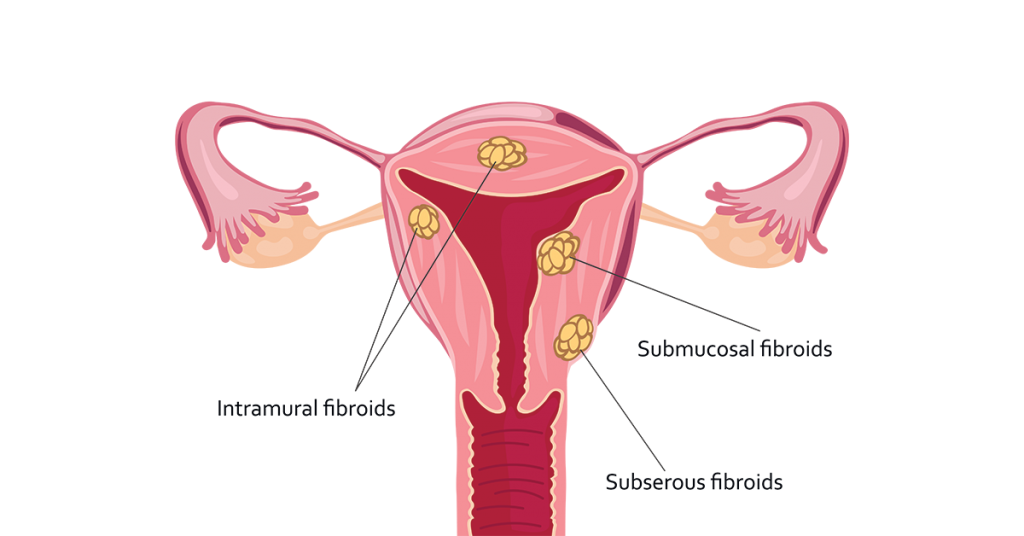
Types of Fibroids
- Submucosal Fibroids: Located just beneath the uterine lining.
- Subserosal Fibroids: Situated on the outer wall of the uterus.
- Pedunculated Fibroids: Attached to the uterine wall by a stalk-like structure, which may be submucosal or subserosal.
Common Symptoms
- Heavy menstrual bleeding
- Prolonged periods
- Pelvic pain or pressure
- Frequent urination
- Difficulty emptying the bladder
- Constipation
- Backache or leg pain
- Pain during intercourse
- Reproductive issues, such as infertility or repeated miscarriages
Risk Factors and Causes
- Age: Most common in women aged 30-40.
- Family history
- Ethnicity: African American women are more vulnerable.
- Obesity
- Diet
- Hormonal factors
Diagnosis
Fibroids can be diagnosed using ultrasound scans, MRI, hysterosonography, hysterosalpingography, hysteroscopy, and laparoscopy.
Ayurvedic Perspective
Ayurveda offers a holistic and natural approach to lasting relief by addressing the root causes rather than just relieving the symptoms, through balancing the doshas. In Ayurveda, fibroids are considered a result of imbalances in the body’s doshas — vata, pitta, and kapha. In particular, an excess of kapha dosha can lead to the accumulation of masses like fibroids. Diet, lifestyle, and emotional factors play crucial roles. Consuming processed foods, fatty foods, and dairy can increase kapha, while stress can aggravate vata and pitta dosha.
Ayurvedic Treatment for Fibroids
Treatment for fibroids in Ayurveda involves dietary adjustments, lifestyle changes, herbal remedies, and detoxification therapy (Panchakarma).
Dietary Adjustments
- Kapha-reducing diet: Focus on fresh vegetables, whole grains, and legumes. Avoid processed foods, red meat, and dairy.
- Anti-inflammatory foods: Include turmeric, ginger, garlic, and green leafy vegetables.
- Hydration: Drink enough water and herbal tea.
Lifestyle Modifications
- Stress management
- Regular exercise
- Adequate sleep
Herbal Remedies
Excellent herbal remedies and specially formulated Ayurvedic supplements are available to support healing fibroids according to Ayurveda. Herbs such as ashoka, nyagrodha, triphala, and manjistha are particularly beneficial in this regard.
Detoxification Therapies
- Virechana (Purgation Therapy): Cleanses excess pitta and removes toxins.
- Basti (Medicated Enema): Balances vata and eliminates deep-seated toxins.
- Abhyanga (Oil Massage): Improves circulation and reduces kapha accumulation.
External Treatments
Intramural Fibroids: Found within the muscular wall of the uterus.
-
- Lepana (Herbal Paste): Turmeric and neem help reduce inflammation and alleviate pain.
- Udvarthana (Herbal Paste Massage): Helps break down excess kapha and improve circulation.
Infertility (Vandhyatva)
Infertility is when a couple cannot conceive (get pregnant) despite having regular unprotected sex. It affects approximately 1 in 7 couples. Around 84% of couples conceive naturally within a year if they have regular unprotected sex. However, for some couples, the process can be more challenging and require medical intervention. After three years, the likelihood of natural conception within the next year drops to 25% or less. Early diagnosis and treatment can significantly improve the chances of conception. Infertility is mainly divided into two types:
- Primary infertility: Never having conceived.
- Secondary infertility: Having had one or more previous pregnancies
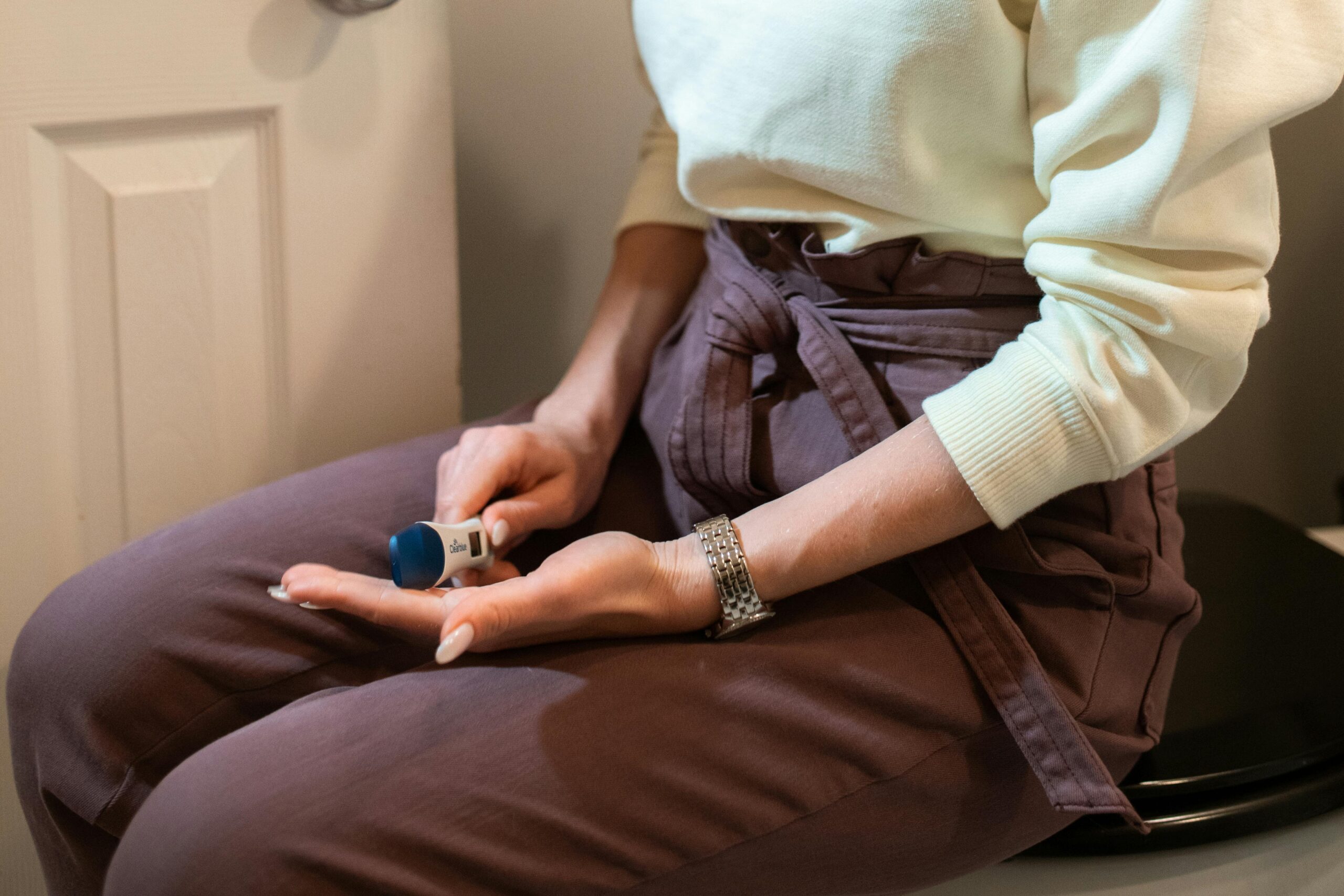
Causes of Infertility
In 25% of cases, it is not possible to identify a specific underlying cause. However, infertility can be due to factors affecting either or both partners.
Infertility in Women
- Lack of regular ovulation: Ovulation problems can result from:
- Polycystic Ovarian Syndrome (PCOS).
- Thyroid problems: Both overactive and underactive thyroid glands can prevent ovulation.
- Premature ovarian failure: When a woman’s ovaries stop working before the age of 40.
- Scarring from surgery: Surgery can damage and scar the fallopian tubes or cervix.
- Cervical mucus problems: Mucus in the cervix fails to become thin enough to allow sperm to pass through.
- Fibroids: Non-cancerous growths in or around the womb that can prevent a fertilised egg from attaching to the womb or block the fallopian tubes.
- Endometriosis: Small pieces of womb lining (endometrium) grow in other areas, such as the ovaries, potentially damaging the fallopian tubes.
- Pelvic Inflammatory Disease (PID): Infection of the upper female genital tract, often caused by an STI, leading to scarring of the fallopian tubes and preventing the egg from travelling to the womb.
- Sterilisation: Blocking the fallopian tubes, making it impossible for an egg to travel to the womb; this is rarely reversible.
- Medicines and drugs: Side effects of some medicines and drugs, including:
- Nonsteroidal anti-inflammatory drugs (long-term use or high dosage).
- Chemotherapy: Can cause ovarian failure.
- Neuroleptic medicines: Antipsychotic medicines.
- Spironolactone: Used to treat fluid retention.
- Illegal drugs: Such as marijuana and cocaine.
Infertility in Men
- Lack of sperm: Very low or no sperm production.
- Sperm motility issues: Sperm that do not move properly, making it harder to reach the egg.
- Morphological abnormalities: Abnormal sperm shape, making them less able to move effectively.
- Testicular issues: Damage to the testicles can affect sperm production, including:
- Testicular infections.
- Testicular cancer.
- Testicular surgery.
- Congenital defects.
- Undescended testicles: One or both testicles not descended into the scrotum.
- Sterilisation: Vasectomy, involving cutting and sealing off the tubes that carry sperm from the testicles.
- Ejaculation disorders: Difficulty releasing semen during sex.
- Hypogonadism: Abnormally low testosterone levels.
- Medicines and drugs:
- Sulfasalazine: Anti-inflammatory drug.
- Anabolic steroids: Often used illegally to build muscle and enhance athletic performance.
- Chemotherapy: May severely reduce sperm count.
- Herbal medicines: Such as root extract of the Chinese herb Tripterygium wilfordii.
- Illegal drugs: Such as marijuana and cocaine.
Tests for Fertility
- Blood tests: To measure progesterone levels and assess ovulation.
- FSH and LH levels.
- Anti-Müllerian hormone (AMH): Predicts egg reserve relative to age.
- Chlamydia test: STI test to assess impact on fertility.
- Ultrasound scan: To check ovaries, womb, and fallopian tubes for conditions like endometriosis, fibroids, or blockages.
- X-ray: To detect blockages in fallopian tubes.
- Laparoscopy: Keyhole surgery involving a small incision in the lower abdomen to examine the womb, fallopian tubes, and ovaries.
- Semen analysis: To assess sperm count, motility, and quality.
Treatment
- Medicines
- Clomiphene (encourage the monthly ovulation)
- Tamoxifen (alternative to clomiphene)
- Metformin for PCOS
- Gonadotrophins (stimulates ovulation in women, improve fertility in men)
- Gonadotrophin releasing hormone and dopamine agonists to encourage ovulation.
- Surgical procedures
- Fallopian tube surgery to break the scar tissue in the fallopian tubes, making it easier for eggs to pass along them.
- Laparoscopic surgery for endometriosis (destroys or removes fluid filled sacs called cysts or to remove submucosal fibroids).
- For PCOS, a minor surgical procedure called laparoscopic ovarian drilling (using heat or laser destroy part of the ovary)
- Correcting an epididymal blockage and surgery to retrieve sperm
- Surgical extraction of sperm
- Assisted conception
- Intrauterine Insemination (IUI)
Artificial insemination, involves inserting sperms into the womb via a thin plastic tube passed through cervix
- In Vitro fertilization (IVF)
The egg is fertilized outside the body. The women take fertility medicine to encourage ovaries to produce more eggs. Then eggs are removed from the ovaries and fertilized with sperm in a laboratory. The fertilized egg called an embryo is returned to the womb.
- Eggs and sperm donation
Treatment with donor eggs is usually carried out using IVF.
Ayurvedic Perspective on Infertility
Ayurveda places significant emphasis on infertility and gynaecological disorders. In Ayurveda, infertility is discussed under yoni roga, meaning vaginal or reproductive disorders in women. The vagina and womb are situated in the apana vata area, and all yoni rogas are primarily due to vitiated vata, although involvement of other doshas is recognised.
Yoni, ovaries, and associated organs are located in the pelvic region, governed by Apana vata. Balancing vata is the main goal of treatment, with secondary focus on correcting pitta or kapha imbalances, which may cause obstruction in arthava vaha srotas. Thirdly, all sexual and gynaecological organs lie on the second chakra (Swadhisthana chakra), where the water element is prominent. Thus, this area needs frequent rejuvenation, nourishment, and hydration.
A well-designed Ayurvedic treatment protocol, tailored to the constitution and strength of the patient and the severity of the condition, administered under proper and continuous consultation, allows patients to experience the natural power of healing.
Polycystic Ovarian Syndrome (PCOS)
Polycystic ovary syndrome (PCOS) is a common condition that affects the normal functioning of women’s ovaries. Typically, polycystic ovaries contain harmless follicles, which are underdeveloped sacs responsible for egg development. However, in PCOS, these sacs are unable to release an egg, disrupting proper ovulation. While it is difficult to determine the exact number of women with PCOS, it is known to be quite common. In the UK, approximately 1 in every 10 women is affected by this condition.
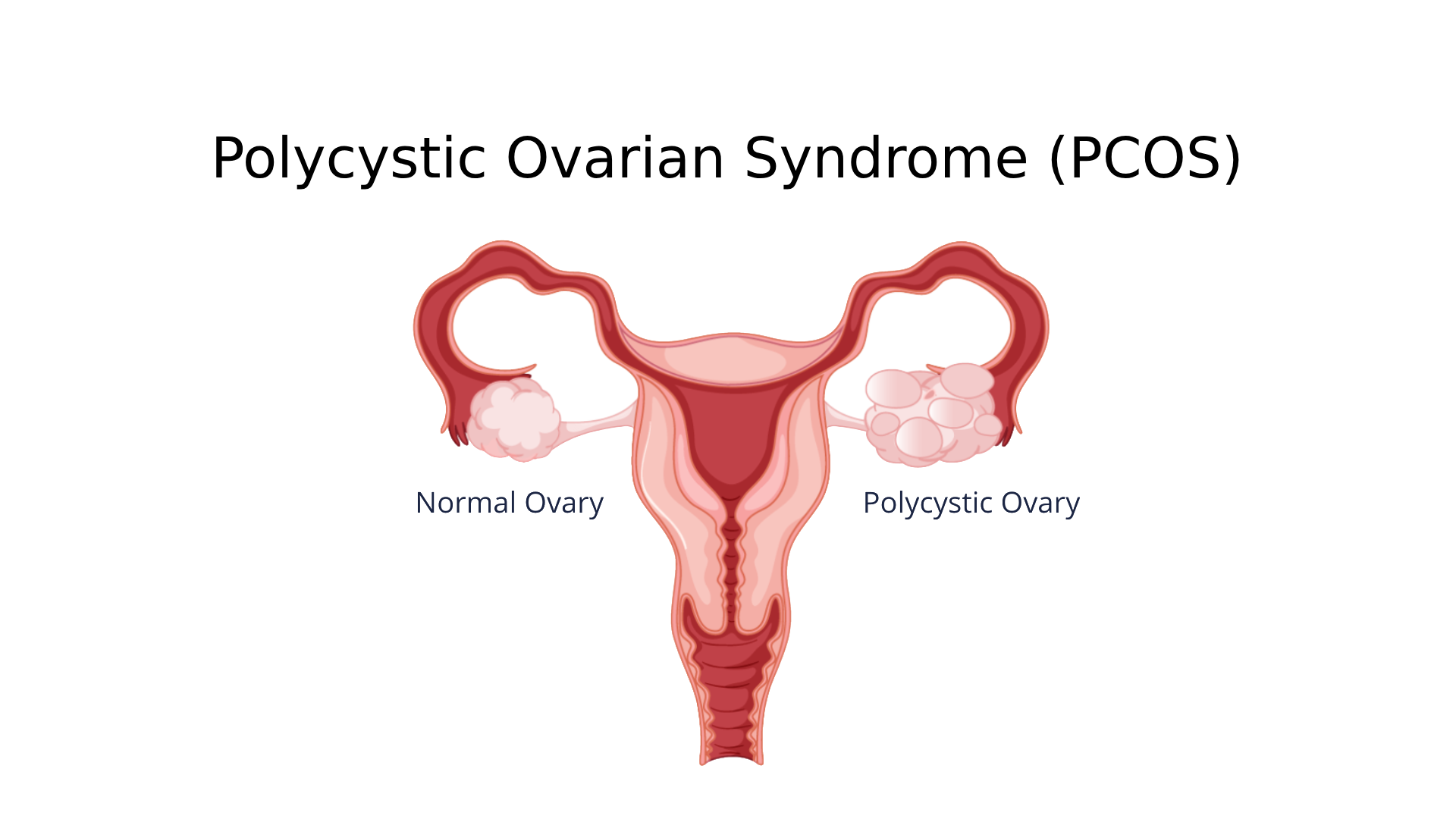
Common Features of PCOS
There are three common features of PCOS:
- Irregular periods
- Excess androgens (increased levels of “male” hormones)
- Polycystic ovaries (enlarged ovaries containing fluid-filled sacs)
If you experience at least two of these features, you may be diagnosed with PCOS.
Symptoms of PCOS
The signs and symptoms of PCOS usually become apparent during the late teens or early twenties. Common symptoms include:
- Irregular periods or no periods
- Fertility issues due to irregular ovulation or lack of ovulation
- Excessive hair growth, particularly on the face, chest, back, and buttocks
- Weight gain
- Thinning hair and hair loss
- Oily skin
- Acne
- Darkening of the skin in specific areas, such as the neck, inner thighs, and groin
PCOS and Ayurveda
According to Ayurveda, PCOS is often linked to imbalances in the Kapha and Pitta doshas.
- Kapha imbalance is associated with symptoms such as weight gain, fluid retention, insulin resistance, and a sluggish metabolism, which can lead to the formation of cysts due to excessive accumulation of fat and heaviness.
- Pitta imbalance can result in inflammation, hormonal imbalances, excessive body heat, and exacerbated symptoms such as hirsutism and acne.
Ayurvedic treatment for PCOS focuses on restoring dosha balance through lifestyle changes, dietary adjustments, herbal remedies, and Panchakarma therapies.
Endometriosis
Endometriosis is a condition where cells similar to those in the lining of the uterus grow in other parts of the body, causing inflammation, pain, and in some cases, scarring. It can significantly impact your physical and emotional well-being. Endometriosis typically develops in areas around the womb, such as the ovaries and fallopian tubes, but it can also affect organs like the bladder and bowel. In some rare cases, it may even spread to areas beyond the pelvic region.
This condition is complex and varies in severity among individuals. Some people may experience mild symptoms, while others suffer from debilitating pain and significant health challenges. Early diagnosis and appropriate treatment can help manage symptoms and improve quality of life.
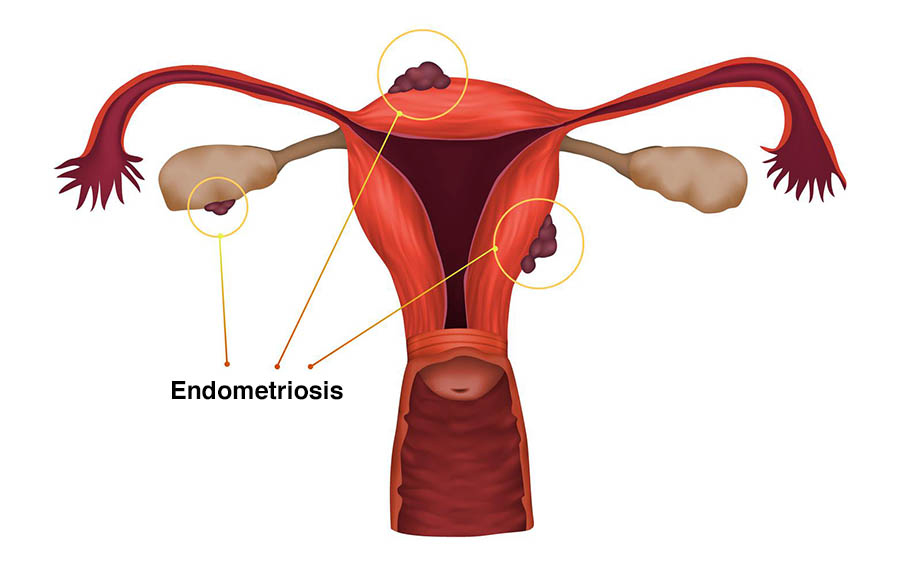
Symptoms of endometriosis include:
-
Severe period pain that interferes with day-to-day activities
-
Heavy periods
-
Pain during bowel movements or urination
-
Low mood and anxiety
-
Fertility issues
-
Pain in the lower abdomen and pelvic area
-
Pain during or after sex
-
Extreme tiredness
-
Bleeding between cycles
According to Ayurveda, endometriosis is a Vata-predominant condition, particularly involving the vitiation of Apana Vata. Apana Vata is a sub-type of Vata Dosha responsible for the downward elimination of urine, faeces, flatus, childbirth, and menstrual blood. The obstruction of Apana Vata causes retrograde menstruation, leading to the accumulation or movement of endometrial tissue to locations outside the uterus.
Symptoms such as severe pain and scanty menstruation are attributed to aggravated Vata, while excessive bleeding, burning sensations, and inflammation are due to the associated Pitta Dosha. Symptoms like heaviness, lethargy, and slimy mucus bleeding with clots are linked to aggravated Kapha.
Endometriosis can be effectively managed through Ayurvedic treatments, which focus on balancing the Doshas and improving the body’s natural healing processes. Treatments may include personalised herbal remedies, dietary adjustments, detoxification therapies such as Panchakarma, and lifestyle modifications. Stress management techniques like yoga, meditation, and pranayama can also play a vital role in addressing the root causes and alleviating symptoms.
Additionally, maintaining a balanced diet that pacifies aggravated Doshas can support long-term health. Foods that are light, easy to digest, and anti-inflammatory are particularly beneficial. Avoiding processed foods, excessive caffeine, and cold or heavy meals can help in managing symptoms.