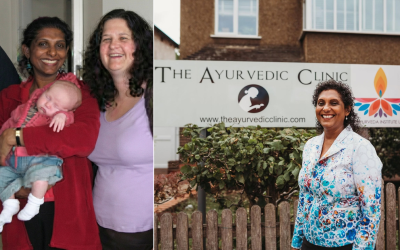
For Tara Riley, returning to Dr Deepika Rodrigo came at an important point in her fertility journey. She had previously sought treatment with us at The Ayurvedic Clinic for rheumatoid arthritis and had already developed an interest in Ayurveda before beginning treatment. When Tara and her husband decided to have a second child, she experienced two miscarriages within a period of around four months, and thus, having previously consulted with Dr Deepika and knowing her expertise in fertility, Tara returned for support.
Her treatment focused on addressing an underlying Pitta imbalance alongside a three-day treatment, dietary changes, herbal remedies and Panchakarma. Tara describes the care she received as supportive and reassuring, and says that consultations left her feeling calmer and more centred. Read on as we discuss how continued support and holistic care helped her move forward with her fertility journey.
Returning to Dr Deepika for Fertility Treatment
“Dr Deepika gave me a diet to follow and herbs to drink to help with this. She was understanding and reassuring in our discussions”
Tara had already been a patient of Dr Deepika before beginning this stage of her fertility journey, as she had previously consulted her regarding rheumatoid arthritis and had been managing the condition through diet and various forms of Ayurvedic medicine. Tara’s interest in Ayurveda began after a trip to India, and she was later encouraged to see Dr Deepika by her Pilates instructor. Having already experienced Dr Deepika’s care and developed confidence in her approach, Tara felt comfortable returning to her when she needed support with her fertility challenges.
Addressing Pitta Imbalance
A Pitta imbalance was identified, and addressing this became an important part of Tara’s treatment to help bring her body back into greater balance. In Ayurveda, Pitta is one of the three doshas and is associated with qualities such as heat and intensity. Dr Deepika incorporated recommendations to help balance Pitta as part of Tara’s care. This included a diet prescribed specifically for her needs along with various herbal remedies.
A Three-Day Treatment and Personalised Support
Dr Deepika provided Tara with a three-day treatment to support her body and heart following the miscarriages, while also focusing on balancing Pitta as discussed above.
“I had a few panchakarma treatments under her care, and I was left feeling more tranquil and at peace”
Undergoing a Panchakarma Detox
Tara underwent several Panchakarma treatments under Dr Deepika’s care, which she describes feeling “more tranquil and at peace” after these treatments. Ayurvedic consultations consider areas such as a patient’s health history, diet, lifestyle and emotional wellbeing, allowing treatment recommendations to be developed around their individual needs.
| Understanding Panchakarma and Fertility
Panchakarma is an Ayurvedic treatment that brings together a range of therapies intended to cleanse the body, support balance and promote overall wellbeing. In Ayurvedic fertility care, it can be incorporated into a personalised treatment plan to help prepare the body for conception. It can support the balance of the doshas, healthy digestion and metabolism, reproductive health and stress management, all of which are considered important aspects of fertility in Ayurveda. The therapies used during Panchakarma are selected according to an individual’s needs and health. As part of fertility care, treatment may also be planned around the menstrual cycle and combined with dietary and lifestyle guidance, herbal remedies and follow-up consultations. |
Preparing for a Healthy Pregnancy
“I have always found meeting with Dr. Deepika an unbelievably positive experience – even though it was fertility issues I was dealing with. She looked at my situation with a supportive and enthusiastic attitude”
As Tara continued with her treatment, Dr Deepika gave her confidence that she would be able to become pregnant again. Tara states that Dr Deepika believed they could work together to create a healthy environment for a baby to stay and grow throughout pregnancy. This reassurance was particularly meaningful following the miscarriages that Tara had experienced. She also says that she felt calmer and more centred after her consultations, despite the difficulties she was experiencing with fertility.
Begin Your Own Ayurvedic Treatment Journey at UK’s Leading Ayurvedic Fertility Clinic
At The Ayurvedic Clinic, we understand that every fertility journey is different. Tara’s experience is one example of how Ayurvedic care can become part of that journey, with attention given to the individual’s health and specific needs at each stage.
Our approach is centred around understanding each of our patients from a holistic perspective using Ayurvedic principles to guide personalised care. This may include dietary and lifestyle recommendations, herbal remedies, Panchakarma and ongoing consultations, depending on what is appropriate for the individual. If you would like to learn more about Ayurvedic fertility care at our clinic, our experienced team is here to discuss your individual needs and help you understand what treatment may be suitable for you. Call now to book a consultation.