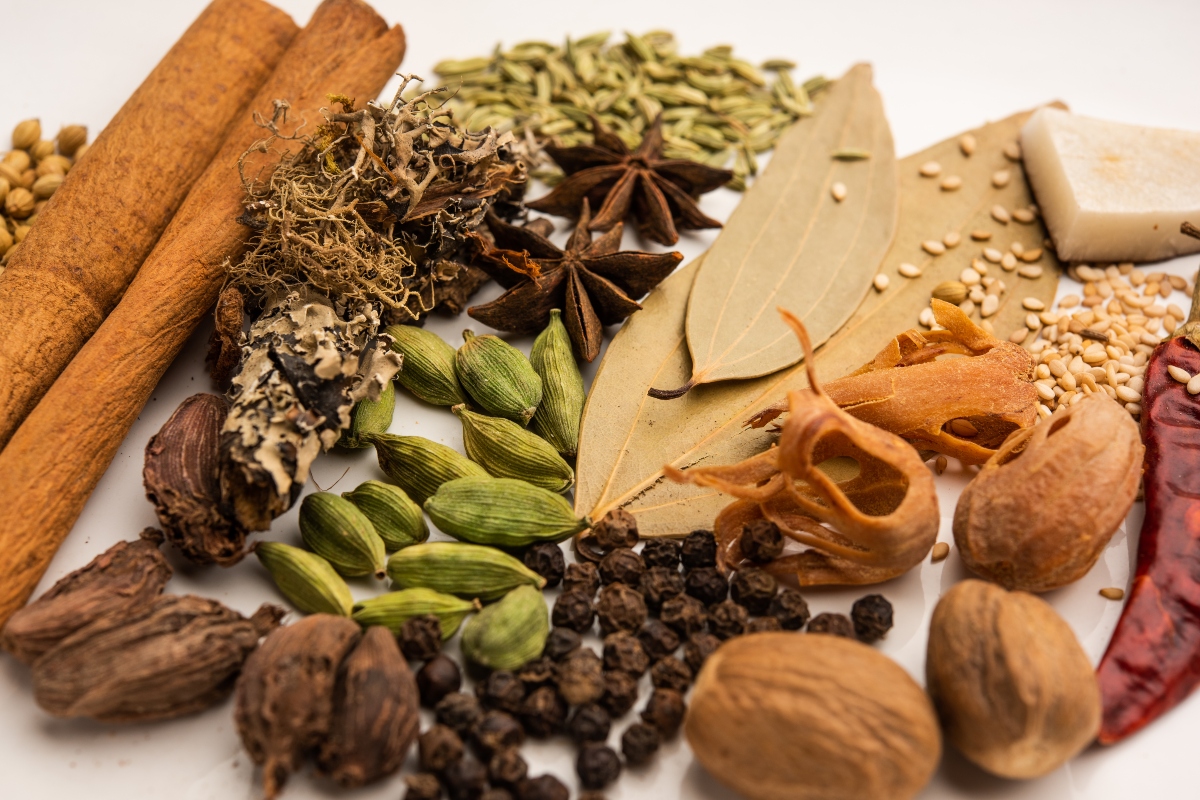
Vibrant, aromatic, and seemingly innocuous, spices play a crucial role in improving our dishes and enhancing our culinary experiences.
But that is far from their whole story. Spices, in fact, have a much more profound impact on our everyday lives because of the power they have to change the course of our digestive health through a few pinches of colour that pack a powerful punch.
Ayurveda understands and celebrates this wonderful fact; and utilises it to its fullest extent by incorporating the incredible culinary and medicinal properties of Ayurvedic spices into our daily lives; thereby supporting digestive health while at the same time promoting overall well-being.
The importance of maintaining digestive health
Being one of the major organ systems in the body, maintaining digestive health is crucial for overall well-being and optimal body functioning. This is because a healthy digestive tract directly leads to:
- Better nutrient absorption
- Enhanced immune function
- Improved mood and better mental health
- Optimal energy levels
- Increased digestive comfort
- Better weight management
Conversely, poor gut health results in an indiscriminate prevalence of digestive disorders that can range from constipation and gastroesophageal reflux disease (GERD) to gallstones and celiac disease. All of which can subsequently give rise to many more serious health issues.
Therefore, prioritising digestive health is a simple but effective way to achieve optimal health and well-being.
Ayurveda and Digestion
Ayurveda places significant emphasis on digestion, considering it to be the cornerstone of health and well-being. In Ayurveda, the digestive process is referred to as “Agni,” which translates to “fire” in Sanskrit. Thereby, Agni represents the digestive fire responsible for breaking down food, absorbing nutrients, and eliminating waste.
As Agni not only governs digestion and metabolism in the body, but is also responsible for transforming food into energy, tissues, and waste products; a balanced Agni ensures efficient digestion and absorption of nutrients, while imbalances in Agni can lead to digestive problems, nutrient deficiencies, and the accumulation of toxins (Ama) in the body.
Agni itself is of several types, each associated with different aspects of digestion and metabolism. For example, Jatharagni governs digestion in the stomach and small intestine, breaking down food into smaller particles for absorption, while Dhatvagni manages the metabolism of specific tissues, ensuring their proper formation and function.
Various factors are known to influence the strength and balance of Agni, including dietary choices, lifestyle habits, and even emotional well-being. Therefore, nurturing Agni and supporting digestive health requires a holistic approach that incorporates a balanced diet, regular physical activity, stress management, adequate hydration, and even probiotic supplementation to support overall health, enhance immune function, and reduce the risk of chronic diseases.
The role of spices in Ayurveda
In Ayurveda, spices are valued not only for their flavour-enhancing properties but also for their therapeutic effects on the body and mind. These healing and rejuvenating benefits include:
Supporting digestion –
Many spices are known for their ability to stimulate digestive fire (Agni) and enhance digestion. Spices such as ginger, black pepper, cumin, coriander, and fennel are commonly used in Ayurvedic cooking to aid digestion, reduce gas and bloating, and promote overall digestive health.
Balancing Doshas –
Ayurveda categorises spices based on their tastes (rasas) and their effects on the doshas (Vata, Pitta, and Kapha). Each spice has a unique combination of tastes and qualities that can either aggravate or pacify specific doshas. By incorporating a variety of spices into meals, a balance of doshas can be achieved that helps to maintain overall health and well-being.
Enhancing absorption of nutrients –
Some spices, such as turmeric, black pepper, and ginger, contain compounds that can enhance the absorption of nutrients from food. For example, black pepper contains piperine, which has been shown to increase the bioavailability of curcumin, the active compound in turmeric, when consumed together.
Supporting detoxification –
Certain spices have detoxifying properties and can help support the body’s natural detoxification processes. Spices like turmeric, cumin, coriander, and fenugreek are believed to help remove toxins (Ama) from the body, support liver function, and promote overall detoxification.
Boosting immunity –
Many spices possess antimicrobial, antiviral, and immune-boosting properties that can help strengthen the body’s defences against infections and diseases. Spices such as garlic, ginger, cinnamon, and cloves are valued in Ayurveda for their ability to support immune function and promote overall health.
Balancing emotional and mental health –
Ayurveda recognises the connection between the gut and the mind and the impact of spices on mental and emotional well-being. Certain spices, such as saffron, cardamom, and nutmeg, are used in Ayurveda to promote relaxation, uplift moods and balance emotions.
Providing antioxidant protection –
Many spices are rich in antioxidants, which help protect the body from oxidative stress and inflammation. Spices like turmeric, cinnamon, cloves, and ginger contain potent antioxidants that can help reduce the risk of chronic diseases and support overall health.
Spices are therefore highly esteemed in Ayurveda not only for their culinary appeal but also for their therapeutic properties. By incorporating a variety of spices into meals, it becomes possible to simultaneously support digestion, balance the doshas, enhance nutrient absorption, boost immunity, and promote overall well-being.
Ayurvedic spices for digestive support
While the sheer variety and healing prowess of spices can often be overwhelming, some are particularly prized for their ability to stimulate digestion, soothe the gastrointestinal tract, and balance the doshas.
A few of the best Ayurvedic spices for optimal digestive health include:
- Ginger (Adrak) –
Ginger is considered one of the best spices for digestion in Ayurveda. It has warming properties that help stimulate Agni (digestive fire) and promote digestion. Ginger is also known for its carminative properties, which can help relieve gas, bloating, and indigestion. It can be consumed fresh, dried, or in powdered form, and is commonly used in teas, soups, curries, and other dishes.
- Turmeric (Haldi) –
Turmeric is a potent anti-inflammatory spice with incredible digestive benefits. It not only helps stimulate bile production, which aids in fat digestion, and supports liver function, but it also has antimicrobial properties that can help maintain a healthy balance of gut bacteria. Turmeric can be used in powdered form or as fresh turmeric root in cooking.
- Cumin (Jeera) –
Cumin seeds are well-known in Ayurveda for their digestive properties as they help stimulate Agni and promote healthy digestion. Cumin is also a carminative spice that can help alleviate gas, bloating, and abdominal discomfort. It is commonly used in cooking, especially in Indian cuisine, to flavour dishes such as curries, soups, and rice dishes.
- Coriander (Dhania) –
Coriander seeds and fresh coriander leaves are used in Ayurveda to support digestion and reduce digestive discomfort. Coriander seeds have cooling properties that help balance Pitta dosha and soothe inflammation in the digestive tract. Coriander seeds can be used whole or ground in cooking, and fresh coriander leaves can be added to dishes as a garnish.
- Fennel (Saunf) –
Fennel seeds are commonly used as a digestive aid in Ayurveda due to their carminative and antispasmodic properties. Fennel helps relieve gas, bloating, and abdominal cramps, making it beneficial for digestive comfort. It can be consumed as a tea, chewed after meals, or used as a spice in cooking to impart a sweet, aromatic flavour.
- Ajwain (Carom Seeds) –
Ajwain seeds are used in Ayurveda to aid digestion and relieve digestive discomfort. They have carminative properties that help reduce gas and bloating and improve overall digestion. Ajwain seeds are often chewed after meals or used as a spice in cooking, particularly in Indian bread (paratha) and lentil dishes.
In addition to the spices themselves, Ayurvedic medicine also recommends several spice blends, known as “masalas” or “churnas,” specifically formulated to support digestive health. These blends combine various spices known for their digestive properties, creating flavourful mixtures that can be used in cooking or as herbal remedies. These include:
- Hingvastak Churna-
Hingvastak churna is a traditional Ayurvedic spice blend used to support digestion and relieve digestive discomfort by helping stimulate Agni (digestive fire), reduce gas and bloating, and improve overall digestion.
It typically contains equal parts of asafoetida (hing), cumin (jeera), coriander (dhania), ginger (adrak), black pepper (kali mirch), long pepper (pippali), ajwain (carom seeds), and rock salt.
- Trikatu Churna –
Trikatu churna is a powerful Ayurvedic spice blend known for its healing properties and ability to support digestion and metabolism. It consists of equal parts of ginger (adrak), black pepper (kali mirch), and long pepper (pippali).
Trikatu churna helps increase Agni, stimulate appetite, and enhance nutrient absorption. It is, therefore, particularly beneficial for individuals with sluggish digestion and Kapha imbalances.
- Panchakola Churna –
Panchakola churna is another traditional Ayurvedic spice blend used to support digestion, reduce gas, and improve appetite. It typically contains equal parts of five spices: long pepper (pippali), ginger (adrak), black pepper (kali mirch), ajwain (carom seeds), and clove (laung).
Panchakola churna helps balance Vata and Kapha doshas, stimulates Agni, and aids in the digestion of heavy foods.
- Digestive Tea Masala –
This Ayurvedic spice blend is used to make digestive herbal teas that promote healthy digestion and relieve digestive discomfort. It typically contains a combination of spices such as cumin (jeera), coriander (dhania), fennel (saunf), cardamom (elaichi), cinnamon (dalchini), and ginger (adrak).
Digestive tea masala helps soothe the digestive tract, reduce gas and bloating, and support overall digestive health.
- Fennel-Coriander-Cumin (FCC) Tea Blend –
This simple Ayurvedic tea blend combines equal parts of fennel seeds, coriander seeds, and cumin seeds. FCC tea is known for its cooling and carminative properties, making it beneficial for balancing Pitta dosha and relieving digestive discomfort.
It can be brewed as a tea and consumed throughout the day to support digestion and promote digestive comfort.
Incorporating these Ayurvedic spices and spice blends into your diet can help support digestive health, promote efficient digestion, and alleviate digestive discomfort.
It is apparent that digestive and gut health is not dependent on the food we consume alone. Our habits, lifestyle, and even our daily routine can have a significant impact on our Agni, and thereby our gut. Similarly, even the substances we use to flavour our dishes can have a substantial effect on our digestive, as well as our overall health.
Ayurveda uses these powerful spices to heal, restore, and nourish our Agni in a holistic manner that not only helps to cure our digestive disorders but also restores health and vitality to our mind and body.
For a more comprehensive understanding of the best ways to prevent and alleviate digestive disorders, visit The Ayurvedic Clinic today! Our panel of experienced Ayurvedic consultants can guide you toward the most natural and holistic practices that help you achieve perfect gut health along with physical, mental, and spiritual rejuvenation.