Eczema is a common skin condition that affects people of all ages and can lead to recurring periods of dryness, itching, redness and irritation. For those living with eczema flare-ups, managing these symptoms can become a daily challenge when flare-ups are triggered by factors such as diet, stress, weather changes or environmental influences. While various treatments available today often focus on reducing inflammation through medications such as topical corticosteroids, Ayurveda takes a holistic approach by looking at the relationship between digestion, lifestyle, diet and the body’s natural balance. The Ayurveda approach to eczema thus focuses on understanding the factors that may contribute to skin concerns and supporting long-term skin health through personalised treatment and lifestyle adjustments
Understanding The Ayurvedic Approach to Eczema
In Ayurveda, eczema is described as Vicharchika, a type of skin disorder that falls under the broader category of Kushta. Ayurvedic texts associate skin conditions with imbalances involving the doshas, the body’s functional energies that influence physical and physiological processes. Ayurveda therefore views eczema as a condition where dosha imbalances may affect the skin and although Vata dosha is considered a significant factor due to qualities such as dryness, sensitivity and irregularity, Pitta and Kapha doshas may also contribute to symptoms.
An increase in Vata may be associated with dry skin, roughness and itching, while aggravated Pitta may contribute to redness, heat and skin inflammation. Kapha imbalance may be linked with heaviness, moisture imbalance and slower healing processes.
From an Ayurvedic perspective, eczema is also not viewed only as an external skin concern. The condition may also be influenced by digestion, food choices, lifestyle patterns and environmental factors. This is why Ayurvedic care often focuses on identifying the underlying imbalance rather than only managing visible symptoms.
Allopathic anatomy
Epidermis
Dermis
Subcutaneous tissue

Ayurveda anatomy
Apicharma
Charma
Adascharma
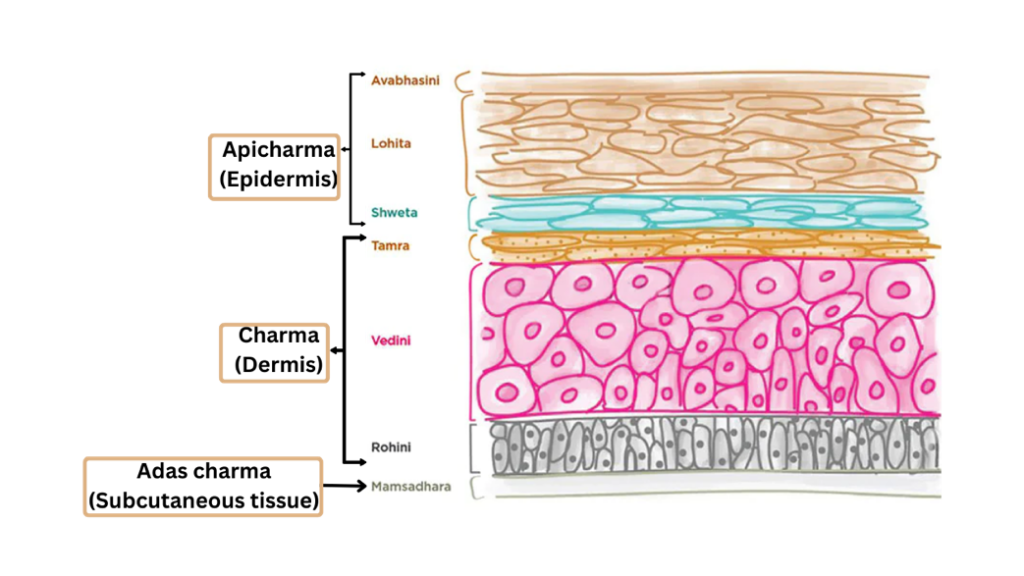
The skin has three main layers. Thousands of years ago, Ayurveda identified these three layers, which are similar to the modern allopathic anatomy of the skin. Furthermore, Ayurveda has analysed seven additional sub-layers of the skin, named Avabhasini, Lohita, Shweta, Tamra, Vedini, Rohini, and Mansdhara. According to the imbalance of doshas involved in these seven layers, different skin disorders are created, such as eczema, psoriasis, dermatitis, hives, etc.
Though Ayurveda identifies eczema as a Thirosha imbalance disorder, the main dosha involved in eczema appears to be Vata dosha. This is because of its nature of dryness, mobility, and sensitivity, which are qualities commonly found in skin disorders, including eczema.
The Connection Between Digestion and Skin Health
Ayurveda places significant importance on digestive fire, known as Agni when approaching any type of illness and treatments for it. According to Ayurvedic principles, healthy digestion supports the proper transformation and utilisation of food, while impaired digestion may lead to the formation of Ama.
Ama is described in Ayurveda as an accumulation of undigested material that may affect the body’s natural balance. When digestion is weakened, Ayurveda suggests that these imbalances may contribute to various health concerns, including skin disorders.
For this reason, Ayurvedic eczema treatment considers digestive health alongside external skin care and supporting the digestive system through suitable foods, meal routines and lifestyle adjustments is considered an important part of maintaining overall health.
What makes eczema such a common disorder?
According to Ayurveda, digestive power (Agni) plays a major role in eczema. When this digestive power is impaired, ingested food is not properly digested or is only partially digested. This indigested food can become toxins, which are called “Ama”. This AMA is sticky, heavy, viscous, stable, and non-absorbable, consisting of unmetabolized waste or toxin particles exhibiting more “KAPHA” characteristics. This unmetabolized waste cannot be utilised by the body, and the AMA can circulate throughout the body.
Ayurveda states that our human body is composed of seven blocks called “SAPTHA DHATU.” Out of these, the first dhatu is supposed to be in the skin and is called RASA DHATU, which has the nature of the KAPHA dosha. The non-absorbable toxins with the characteristics of the RASA DHATU are deposited on the RASA DHATU in such a way that things with the same characteristics come together. Then, accumulated toxins are shown on the skin. Due to this mechanism, the wrong food we eat can quickly show up as a reaction on the surface of the skin and that is why eczema can appear on the skin. Intolerance to certain substances further exacerbates skin issues, which is why eczema has such a connection with food.
Foods that aggravate Eczema
Even though eczema is a disorder caused by an imbalance in Thirosha, it mostly appears as a Vata and Kapha imbalance disorder. Therefore, it is best to avoid long-term intake of dry and cold foods in our diet, as they directly affect VATA and KAPHA doshas imbalances.
VATA – Grains, nuts, seeds, low variant of barley, horse gram, black gram, raw vegetables, salads
KAPHA – Wheat, dairy products such as full cream milk, curd, buttermilk, evaporated milk, green salads, lentils
It is mostly caused by incompatible food combinations, as follows;
- Various kinds of classic grams along with milk, curd, buttermilk, horse gram, black gram and oil,
- Continuous intake of aquatic and marshy flesh with milk: such as deer with milk
- Using radish with jaggery
- Excessive use of alcohol with milk,
- Intake of honey and meat after a hot meal and vice versa.
Even though the main imbalanced doshas in eczema are Vata and Kapha, if the impaired digestive fire travels along with non-absorbable toxins and encounters skin heat (Brajaka Pitta), it can manifest as hot and inflamed signs and symptoms on the skin. This condition is called a “flare-up.” It mostly occurs when consuming Pitta-increasing foods, which are pungent, sour, salty, or have excessively hot tastes.
- Fruits – Pineapple, grapefruits, lemons, dried fruits
- Vegetables – Tomatoes, garlic, aubergines, radishes, onions
- Grains – Buckwheat, millet, corn
- Fish used with lemon and milk
- Excessive consumption of newer grains
- Continuous intake of red meats like beef and bacon
- Overconsumption of colourful fish like prawns, lobster, mussels
If the eczema-prone skin exhibits more flare-ups after consuming such foods, the first step is to eliminate them from your diet.
Ayurvedic Treatment for Eczema Patients
The Ayurvedic treatment approach for eczema is personalised according to an individual’s constitution, symptoms and overall health. Ayurvedic management includes dietary guidance, herbal formulations, medicated oils and purification therapies as the aim of ayurvedic eczema treatment is to support balance within the body and improve the factors that may contribute to recurring symptoms
- Panchakarma
- SNEHANA (Oleation)
- SWEDHANA (Induce the sweat)
- SHODHANA (detoxifying)
Panchakarma
Panchakarma a well-known purification approach in Ayurveda and consists of a series of therapies designed to support the body’s natural cleansing processes. It may include procedures such as Snehana (oleation), Swedhana (sweating therapy) and other Shodhana treatments depending on the individual’s needs. From an Ayurvedic perspective, Panchakarma aims to support dosha balance and address internal imbalances that may contribute to conditions such as eczema. The therapies are personalised based on factors such as Prakriti (individual constitution), digestive strength and the specific presentation of symptoms.
SNEHANA (Oleation)
This means lubrication or oleation. After assessing the priority of the defective DOSHA, SNEHANA treatment can be administered internally and externally until signs and symptoms disappear. This is because the main symptoms of impaired VATA include scaling, itching, and dryness, all of which can be alleviated by applying oil.
Oleation reduces inflammation and heat while providing a soothing effect on the skin. By reducing inflammation and heat, it promotes the natural healing process that we are born with. Ayurveda utilises specific natural medicated oils with cooling and moisturising effects. These oils can absorb heat, eliminate excessive dryness from the impaired skin, and retain moisture.

In our Ayurvedic clinic, we commonly use medicated oils and “Chaveda Cream” for eczema conditions. Our patients attest to the immediate cooling and soothing effects experienced after using Chaveda Cream on their skin.

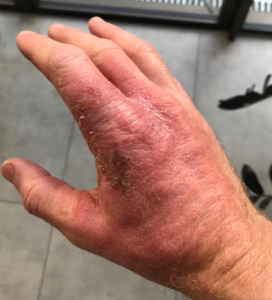
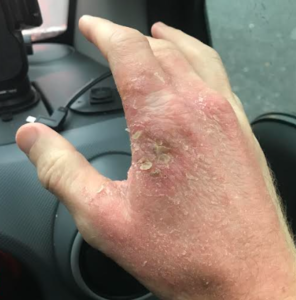
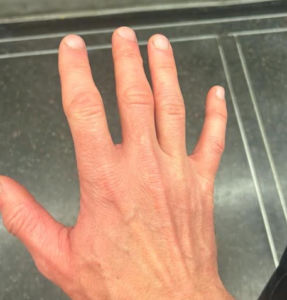
“I have suffered from eczema for years. I had itchy rashes with flaking skin and sometimes inflamed and bleeding skin. It was extremely painful and unpleasant to see. All these years I have been trying steroid creams and antibiotics, but nothing seems to be a permanent solution. I started seeking alternative methods for relief, which led me to find The Ayurvedic Clinic. I have undergone treatments with Dr Deepika to find out the cause for my skin issues. She put me on a strict diet, recommended cleansing herbs, and also recommended Chaveda Extreme Moisturiser as a daily moisturiser for my skin. I also underwent a complete detoxifying treatment called Panchkarma. I loved it so much that I had this treatment a few times. This has greatly reduced my itchiness and helped to relieve my skin condition, and I am finally free from Eczema. And now I know what caused my eczema and can prevent it from happening again.”
– Eczema Treatment, Patient Testimonial
SWEDHANA (Induce the sweat)
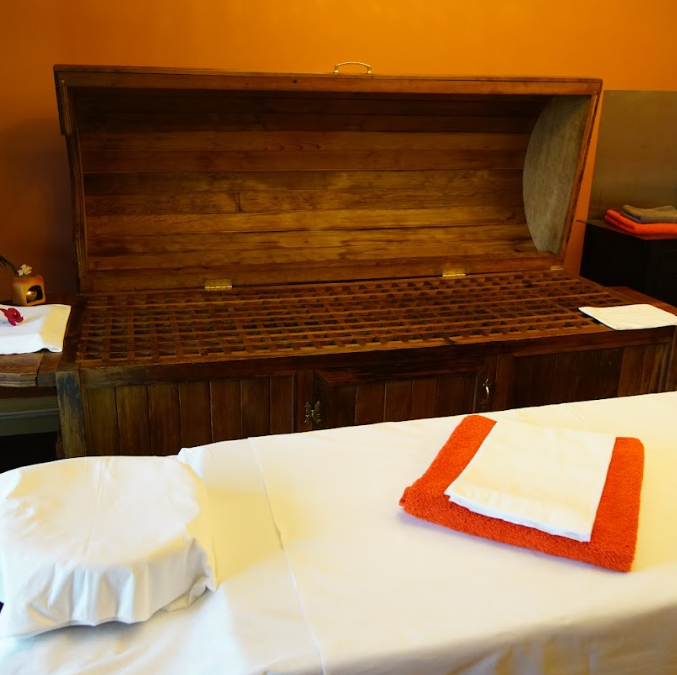
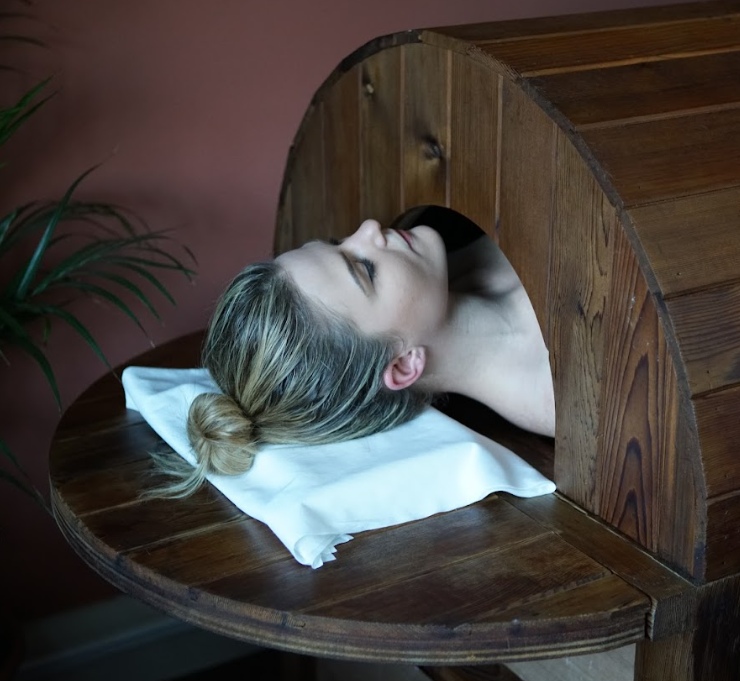
This induces sweating, which typically opens the pores of the skin, facilitating the elimination of toxins. We often use Ayurvedic “DHUMA” (herbal smoke or fumigation) on impaired skin once or twice a week for detoxification purposes. Additionally, a regular steam bath or sauna can have beneficial healing effects on skin disorders.
SHODHANA (detoxifying)
There are two steps of Shodana
- LANGHANA (DIETARY GUIDANCE)This is defined as the lightness of the body. It is a body-cleansing therapeutic measure that eliminates vitiated doshas. During this process, the digestive system receives complete rest. Removing food for a period gives the gut a break from digestion and allows for the accumulation of nutrients, benefiting the elimination of micro-toxins.This therapy aids in cooling and calming and is designed to eliminate and reduce vitiated doshas, as well as thoughts and strong emotions. It also helps improve digestive fire, removes AMA from the body, and clears blockages from SROTAS and tissues, resulting in a feeling of lightness and improved health.
- DEEPANA and PACHANA (CORRECTING THE DIGESTION)In Ayurveda, for every disease, the principle of centre of attention is digestive fire or AGNI management. DEEPANA and PACHANA therapeutic procedures help to correct impaired digestion and stop producing AMA inside the gut.These procedures are successfully carried out at our clinic with specific herbal medicine. But our best ayurvedic treatment method for SHODANA is the PANCHAKARMA treatment, which has shown more successful results and is popular among Eczema patients.
Ayurveda and Long-Term Skin Health
Eczema is a chronic skin condition that may involve recurring symptoms and periodic flare ups. Symptoms such as dryness, itching, redness, irritation and inflammation can cause physical discomfort, which is why long-term management focuses on understanding personal triggers and supporting overall skin health. Managing eczema also involves recognising common triggers such as stress, diet and environmental factors. Supporting digestion, reducing stress and maintaining healthy lifestyle habits may help reduce flare ups and support long-term skin health.
A Holistic Approach to Eczema Care at The Ayurvedic Clinic
At The Ayurvedic Clinic, we take a personalised approach to supporting individuals with eczema and other skin concerns. Our Ayurvedic consultations focus on understanding your constitution, lifestyle, diet and the factors that may contribute to skin imbalance. Through dietary guidance, Ayurvedic treatments, herbal remedies and recommendations for various lifestyle changes, we aim to help you support long-term skin health and overall well being. Contact us at The Ayurvedic Clinic today to arrange a consultation and learn more about Ayurvedic treatment for eczema.